

Over 730 institutions managing $22.4 trillion in assets have committed to disclosing nature related financial risks. As global capital markets revalue ecosystems, a pioneer development model in Vietnam has already anticipated this paradigm shift.
Over the past two years, nature has migrated from conservation discussions into an explicit line item on financial balance sheets. By November 2025, 733 organizations across 56 countries and territories had committed to reporting under the Taskforce on Nature related Financial Disclosures framework. Representing over $22.4 trillion in assets under management, these institutions mark a 46% increase in adoption within a single year. This trajectory gained regulatory backing in April 2026 when the International Sustainability Standards Board confirmed plans to establish nature disclosure standards building directly on the TNFD framework, with more than 40 jurisdictions referencing ISSB standards within their legal frameworks. Survey data from TNFD reveals that 63% of participating institutions view nature risks as equal to or greater than climate risks regarding long term financial prospects.
Ecosystems have transitioned from compliance costs to valued economic assets, a reality particularly pronounced along ocean coastlines. The OECD estimates that if viewed as a national economy, the global ocean economy would rank as the fifth largest worldwide. Roughly two thirds of that economic yield derives from coastal tourism and marine operations, depending directly on maintaining intact coastal ecosystems.
Vietnam is placing a strategic priority on this economic equation. Resolution 36 NQ TW mandates that pure marine economy sectors generate approximately 10% of national GDP by 2030, while 28 coastal provinces deliver 65% to 70% of national GDP. Coastal tourism and services stand as the primary development priority, requiring resource extraction to remain strictly within ecosystem recovery capacities. Vinhomes’ development trajectory anticipated this market evolution early. During an era when urban dwellers commuted across fragmented districts for daily needs, the developer pioneered unified ecosystems integrating housing, schools, hospitals, commercial hubs, and leisure amenities. As market demand evolved toward wealth preservation, properties were structured as cycle proof store of value assets. Before financial markets formally repriced natural assets, Vinhomes introduced its expanded ESG++ benchmark, augmenting traditional Environmental, Social, and Governance pillars with Ecosystem Regeneration and Climate Adaptation.
Mr. Jean Paul de la Fuente, Director of New7Wonders and Chairman of the “7 Wonders of Future Cities” campaign, reflected on this execution following an extensive field evaluation in Vietnam: “To be completely honest, my on site experience in Vietnam left a far stronger impression than anything I had previously read. Observing firsthand how Vingroup and Vinhomes operate their ecosystem, I realized this is a creator of a comprehensive living environment.” That assessment explains the operational foundation allowing ESG++ to be deployed twice across contrasting ecological settings in less than eight months.
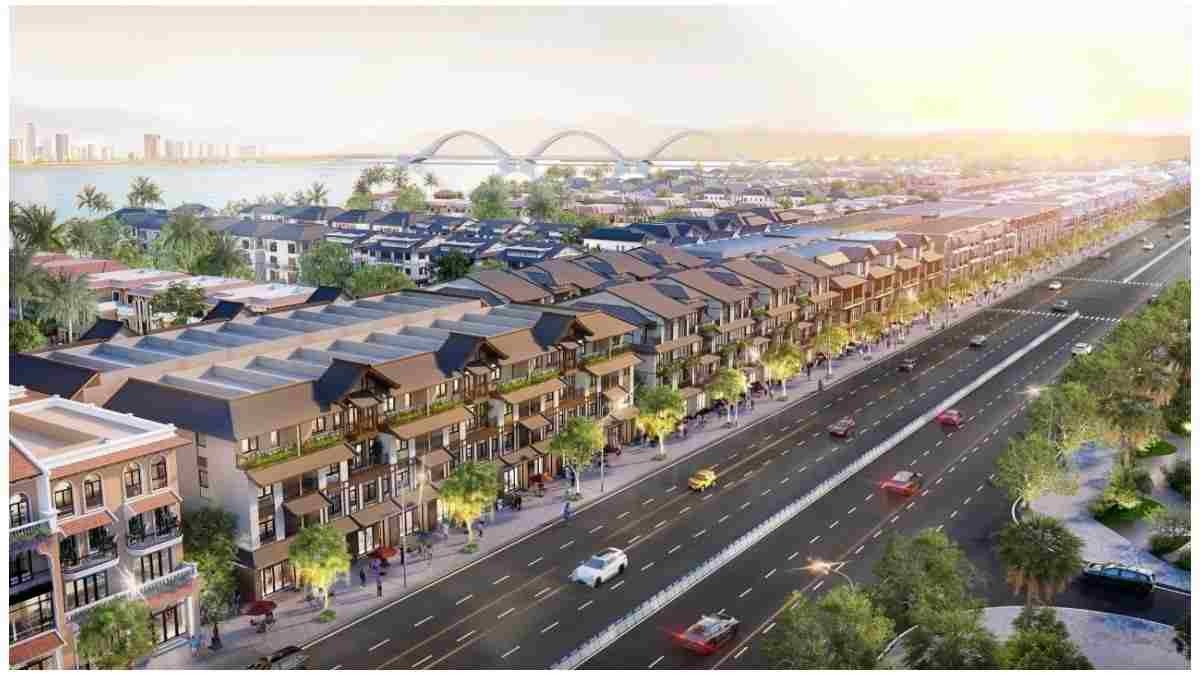
In April 2025, Vinhomes Green Paradise broke ground in Can Gio across 2,870 hectares backed by a $10 billion investment, adjacent to the 75,740 hectare UNESCO Mangrove Biosphere Reserve established in 2000 as Vietnam’s first world biosphere reserve. The engineering challenge centered on constructing a megacity alongside Southern Vietnam’s natural ecological shield while preserving its protective capacity. The comprehensive solution integrated a dedicated forest regeneration fund, soft mud consolidation technology costing multiples of traditional methods, zero net emission energy targets, and an ISO 37122 smart city certification secured during the planning phase as a global first.
In December 2025, Vinhomes Global Gate Ha Long broke ground across 6,206 hectares with an $18 billion total investment, bordering the UNESCO World Natural Heritage site designated in 1994 and expanded into the Ha Long Cat Ba archipelago in 2023. The development challenge shifted toward managing carrying capacity at a global heritage destination while preserving delicate karst topography. Execution focused on green ecosystems, extensive water bodies, large scale regenerative spaces, and a multifunctional urban structure engineered for extended visitor stays.
Two contrasting ecological profiles share one unified framework, marking the boundary between an isolated project and a scalable methodology. This framework resolves a common limitation among global coastal developments, which typically remain tied to single locations and state capital funding. If both bays deliver on operational commitments, their value will extend far beyond 9,000 hectares or $28 billion in combined capital investment. They offer concrete evidence for what $22.4 trillion in global assets is seeking, proving that nature conservation and economic growth engines function as complementary variables in the same equation. Building regenerative cities and establishing an all species living standard gains true credibility when demonstrated twice across contrasting ecosystems using verifiable data.