

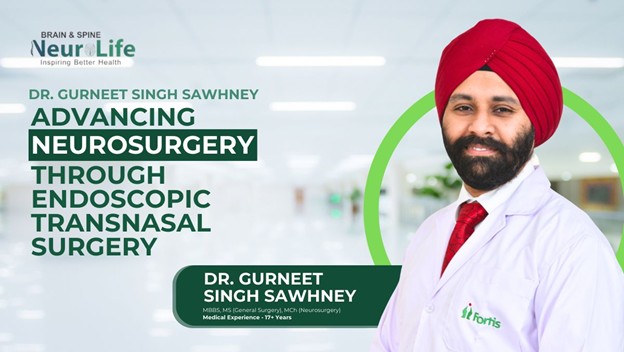
Mumbai (Maharashtra) [India], September 1: Leading Mumbai-based neurosurgeon Dr. Gurneet Singh Sawhney has acquired expertise in endoscopic transnasal surgery — a minimally invasive, scar-free approach for removing pituitary macroadenomas (large, non-cancerous tumors of the pituitary gland, a small gland at the base of the brain). He has achieved immense success in performing these surgeries, demonstrating precision, safety, and speedy recovery in advanced minimally invasive neurosurgery.
Dr. Gurneet Singh Sawhney explains that minimally invasive neurosurgery provides precision and exceptional patient comfort. Although pituitary tumors can be challenging to access, they can now be reached using the natural corridor of the nose, allowing complete removal without leaving visible scars.
Pituitary macroadenomas are tumors larger than 10mm that can cause vision loss, hormonal changes, and headaches by pressing on nerves and brain structures. Performing a surgery through the traditional approach would involve opening the skull, but advances now allow removal through the nose, reducing incisions and risk to healthy brain tissue. With advanced microsurgery options, it is possible for patients with pituitary macroadenomas to return to normal life just days after surgery.
He explains that in the transnasal procedure, the neurosurgeon inserts a slim camera through the nostrils to view the tumor and nearby important structures. The tumor is then carefully removed with special instruments, preserving healthy tissue whenever possible.
Dr. Sawhney highlights the intricacies of transnasal endoscopic microsurgery, underscoring the importance of precision as a critical factor for successful outcomes in challenging cases, in addition to the use of advanced imaging and navigation technology.
He notes these tumors are in the sella turcica at the skull base, near key nerves and arteries. Skilled surgery is vital to avoid complications. He further emphasizes the main advantages of this microsurgery: no visible scars, reduced post-operative discomfort, and better preservation of brain and hormonal function. Dr. Sawhney notes that patients can be discharged within a couple of days after surgery.
He shares a recent case of a 38-year-old man who consulted him during an OPD session with a closed left eye with unclear vision. Fortunately, he also brought along a recent MRI of his brain for further diagnosis, as advised by his physician. The MRI scan revealed a large pituitary macroadenoma, i.e., a tumor in the pituitary with bleeding, suggesting the need for an emergency procedure.
The focus of the surgery was to save the vision and his eye movements. Though he was aware of the need for the surgery, he wondered about the procedure to remove the tumor. Dr Gurneet Singh Sawhney explained that the procedure would be performed through the nose without a single cut on the skin. Upon consent, Dr Gurneet Singh Sawhney, along with his ENT colleague, performed the surgery.
The tumor was very aggressive, along with bleeding, and had destroyed the surrounding bones. Dr Gurneet Singh Sawhney and his team were able to save the surrounding major blood vessels, which were located very near the tumor. The patient received suitable post-operative care for the following three days, after which he was discharged. Within two weeks, the patient could move his eye minimally, followed by movement in the eyelid, which was a good sign. After six months, his eye had returned to normal and was fully functional. Also, a repeat MRI scan showed no sign of any residual tumor.
The patient thanked Dr. Gurneet Singh Sawhney and his team for removing the tumor and restoring his vision. He appreciated the manner in which Dr. Gurneet Singh Sawhney handled his case and surgery. He feels completely normal now and relieved that he is tumor-free.
Dr Sawhney said, “Timely intervention is critical in case of pituitary macroadenoma. The transnasal endoscopic approach allows for complete removal of the tumor along with recovery and better preservation of function. I advise patients to seek immediate medical attention if they experience unexplained headaches, weakness, or changes in their vision at all costs. Early diagnosis can save not only their sight but their lives too.”
Conclusion
Dr Gurneet Singh Sawhney is one of the leading neurosurgeons in Mumbai with rich experience in handling the most challenging neurological cases with immense success. A patient-centric surgeon with an empathetic approach, he makes not only his patients but also their relatives at ease. He speaks more than 8 languages fluently, and hence his patients feel at ease during their treatment and trust him greatly.
About Dr. Gurneet Singh Sawhney
Dr. Gurneet Singh Sawhney, a Mumbai neurosurgeon, is noted for his expertise in finesse in minimally invasive techniques and challenging skull-base surgeries. Trained at premier national and international institutes, Dr. Sawhney combines cutting-edge technology with surgical precision to deliver outstanding outcomes. He brings together robotics, intraoperative imaging, and microsurgery in a sync during surgery aiming to preserve normal brain function. His patient-centric approach and multilingual capacity enhance patient trust and faith in him.
Media Contact:
Dr. Gurneet Singh Sawhney
+91 8104310753
gurneetsawhney@gmail.com
C-118, 1st Floor, Hallmark Commercial Complex, Vasant Oscar, LBS Marg, Mulund West, Mumbai, Maharashtra – 400082
Dr. Gurneet Singh Sawhney, a Mumbai neurosurgeon, is noted for his expertise in finesse in minimally invasive techniques and challenging skull-base surgeries. He brings together robotics, intraoperative imaging, and microsurgery in a sync during surgery aiming to preserve normal brain function. His patient-centric approach and multilingual capacity enhance patient trust and faith in him.
Based in Mumbai, he has successfully performed numerous endoscopic transnasal surgeries for pituitary macroadenomas, offering patients a safer, faster-recovery alternative to traditional brain surgery.