

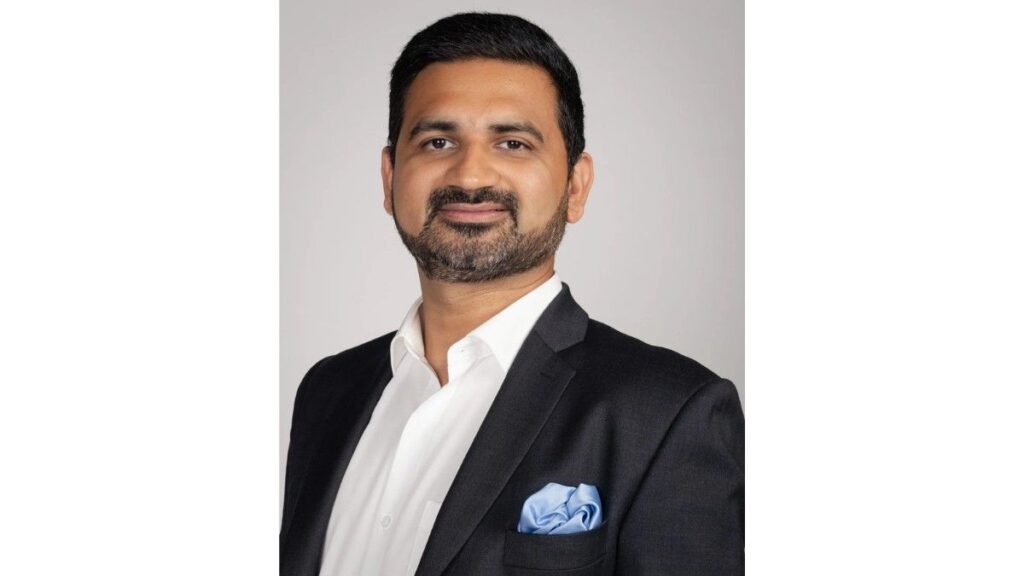
Kinshuk Kocher, Director, Co-Founder, CareDose
Over the past couple of years, I’ve noticed a clear shift in the way many health-tech startups present themselves.
Founders who once began their pitch by explaining the clinical problem they were trying to solve now often begin with the technology powering their solution. Conversations that previously centred on patients, providers and gaps in care increasingly start with discussions about large language models, machine learning frameworks or generative AI capabilities.
This isn’t surprising. AI has rapidly become one of the most exciting developments in healthcare, and rightly so. It has the potential to improve diagnostics, support clinical decision-making, identify patients at risk earlier, and make healthcare delivery more efficient.
But there is one lesson I keep returning to, both from my experience as a founder and now from evaluating hundreds of healthcare companies.
AI is most valuable when it helps solve a clearly understood patient problem. It cannot compensate for a poor understanding of that problem.
The Lesson Learned While Building Caredose
Before joining Cedars-Sinai Technology Ventures, I co-founded Caredose, a medication management company focused on improving medication adherence for patients living with chronic conditions.
Medication non-adherence remains one of healthcare’s most persistent challenges. Patients managing long-term illnesses often need to take multiple medicines at different times throughout the day. Missing doses, taking medicines incorrectly, or struggling to maintain complicated schedules can reduce treatment effectiveness and create additional challenges for both patients and healthcare providers.
When we started Caredose in 2017, our first instinct was not to ask how technology could solve the problem. Instead, we spent time understanding why the problem existed in the first place.
We worked closely with pharmacies, healthcare providers, caregivers and patients to understand where medication management became difficult. We observed how medicines were dispensed, how treatment schedules were communicated, and where patients faced practical barriers in following their prescriptions.
Those observations shaped every product decision we made.
Rather than simply reminding patients to take their medicines, Caredose focused on simplifying the medication experience through organised, dose-wise packaging and structured medication management designed to make treatment easier to follow.
Over the following four years, Caredose managed more than one million medicine doses across India. The company improved medication adherence from below 50 per cent to above 80 per cent among provider partners, built integrations with organisations such as Apollo Pharmacy and Max Hospitals, and worked alongside organisations including the World Health Organisation (WHO), USAID and the Gates Foundation.
Looking back, I don’t think our biggest advantage was the technology we built. It was the time we spent understanding the problem before we attempted to solve it.
Technology Should Strengthen Insight, Not Replace It
Today, at Cedars-Sinai Technology Ventures, I have evaluated more than 500 healthcare startups and worked across institutional investments supporting health-tech innovation.
One pattern has become increasingly clear.
The companies that create lasting impact rarely begin with technology alone. They begin with a deep understanding of the people using the product and the healthcare systems in which those products will operate.
AI can make an already thoughtful solution significantly better. It can help identify patterns, automate repetitive processes, and support more personalised care.
What it cannot do is replace the work of understanding patients, providers and clinical workflows.
If founders haven’t identified the real barrier preventing better healthcare outcomes, then AI will often accelerate solutions that were never addressing the right problem in the first place.
Technology moves quickly. Healthcare adoption does not.
Successful healthcare innovation depends on earning the trust of clinicians, fitting naturally into existing workflows, and delivering meaningful improvements for patients. Those challenges cannot be solved by adding another AI layer.
The Companies That Stand Out
After evaluating hundreds of companies, I’ve found that the strongest founders share a common characteristic.
They spend time understanding healthcare before trying to transform it.
They observe how clinicians work, how patients navigate treatment, and where operational bottlenecks genuinely exist. They test assumptions early, adapt based on real-world feedback and recognise that adoption is as important (if not more important) as innovation.
These companies don’t treat patient behaviour as an afterthought or assume technology alone will drive change.
Instead, they build products around the realities of healthcare delivery and then use technology to make those solutions more effective.
That’s where AI creates its greatest value.
Not by becoming the product itself, but by making a well-understood solution even stronger.
Start With the Patient
Healthcare has always been about solving human problems.
AI gives us extraordinary new capabilities, and I believe it will continue to reshape every part of healthcare over the coming decade. But its greatest impact will come when it is applied with purpose rather than simply for novelty.
Before asking how AI can improve a product, founders should first ask whether they fully understand the patient problem they are trying to solve, the clinical environment in which that problem exists, and the people who will ultimately use their solution.
Those questions shaped how we built Caredose. They continue to shape how I evaluate healthcare startups today. Technology will continue to evolve. The need to understand patients never will.
About the Author
Kinshuk Kocher is Director of Investment Operations & Special Projects at Cedars-Sinai Technology Ventures in Los Angeles. He previously co-founded Caredose, a medication management company focused on improving medication adherence for patients with chronic conditions. He holds an MBA from the University of Oxford.