

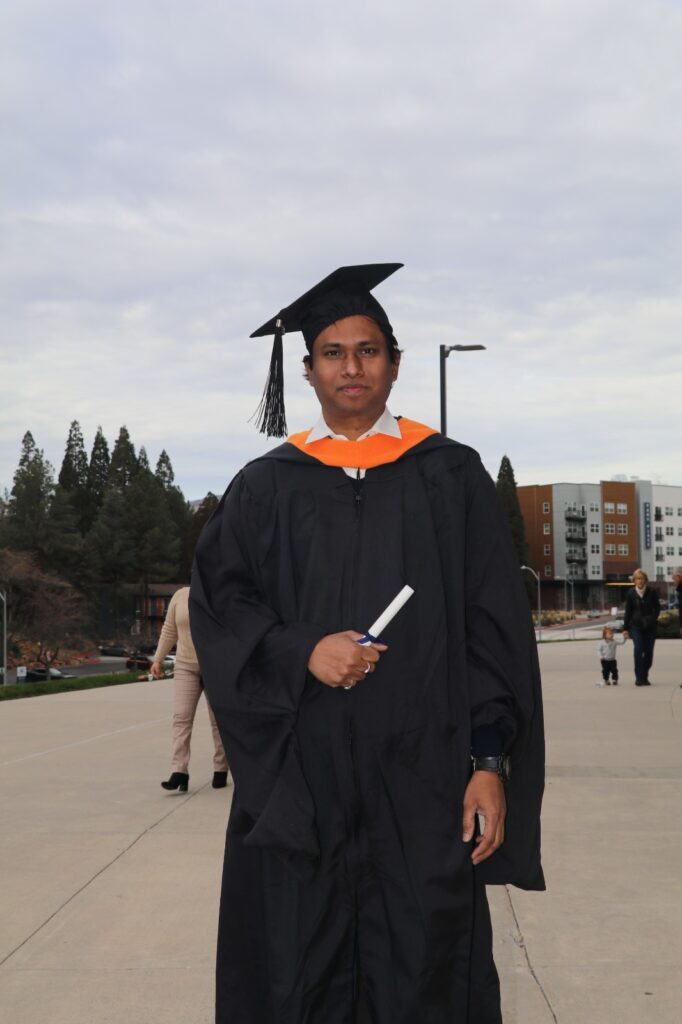
Dr. Varadala Sridhar is a researcher whose academic career spans artificial intelligence, machine learning, deep learning, wireless communication, device-to-device systems, and next-generation wireless network technologies. With over a decade of scholarly experience, numerous SCIE and Scopus-indexed publications, and a growing citation record across various platforms, he has established himself as a voice with both technical depth and interdisciplinary insight. His work in areas like energy-efficient wireless systems, intelligent algorithm design, communication networks, and AI-driven optimization informs his approach to understanding modern intelligent systems. This background forms the foundation of his book, ‘ChatGPT and Artificial Intelligence’, which has been cited academically and is rapidly gaining recognition as a structured, accessible guide to the rapidly evolving world of AI.

The Evolution of Artificial Intelligence: From Rule-Based Systems to GPT Models
Artificial intelligence is reshaping industries, education, healthcare, finance, and creative sectors at a speed few technologies have ever achieved. Yet public understanding often trails behind its acceleration. In this context, Dr. Sridhar’s book provides clarity by tracing the journey of AI from its origins in the 1950s to the present day.
He begins with rule-based expert systems such as MYCIN, which attempted to mimic reasoning through fixed “if-then” logic but lacked adaptability. The rise of machine learning in the 1990s transformed the field by enabling computers to learn from data, driving advancements in handwriting recognition, spam filtering, speech processing, and other real-world applications. The 2010s ushered in deep learning, where neural networks trained on large datasets achieved unprecedented accuracy in image recognition, notably through breakthroughs showcased in ImageNet. These milestones formed the technological path that ultimately led to today’s generative AI systems, such as GPT.
How ChatGPT Works: A Deep Dive Into Transformer Models and AI Language Processing
Understanding ChatGPT requires an appreciation of the fundamental architectural shift introduced by transformer models. Dr. Sridhar’s book makes this transition accessible by breaking down how transformer-based systems analyze patterns, interpret context, and generate coherent language.
He explains the role of self-attention mechanisms in identifying relationships across sequences, allowing the model to process meaning with remarkable accuracy. Pre-training on vast corpora enables the model to internalize linguistic structure, while fine-tuning refines responses for more natural, conversational dialogue.
Throughout this section, concepts such as embeddings, sequence modeling, natural language understanding, and natural language generation are presented clearly and concisely. To reinforce learning, the chapter concludes with assessment questions that help readers apply and internalize the technical principles discussed.
The Science of NLP: How Language Models Learn Meaning, Context, and Human-like Expression
Natural language processing forms the foundation of every conversational capability ChatGPT displays, and Dr. Sridhar dedicates significant detail to explaining these core principles. He outlines how models absorb semantic relationships by training on large datasets, gradually learning how words connect, how meaning shifts in context, and how language evolves across domains.
Key elements of NLP, including tokenization, contextual embeddings, and probabilistic language modeling, are examined as essential components that enable AI systems to generate coherent and meaningful language. These processes reveal how language models move from pattern recognition to increasingly sophisticated forms of expression. By guiding readers through each of these building blocks, the book demonstrates how modern NLP systems achieve the fluent dialogue, contextual accuracy, and expressive capability associated with advanced AI models like GPT.
Real-World Impact of ChatGPT: How AI Is Transforming Education, Healthcare, and Global Business
Dr. Sridhar offers detailed insight into the practical applications of conversational AI. In education, ChatGPT enhances learning by supporting personalized tutoring, simplifying complex academic concepts, and guiding students through difficult material. In healthcare, particularly in telemedicine settings, the model facilitates natural-language interaction, assists in triage processes, and reduces documentation burdens.
The book also examines its influence in business environments, where ChatGPT improves efficiency in customer communication, content creation, research, and operational decision-making. Marketing, creative industries, financial services, and professional sectors are all embracing conversational AI as a crucial component of their digital transformation initiatives. These examples illustrate how deeply AI has integrated into global workflows and how it continues to reshape the nature of work.
The Limitations of ChatGPT Explained: Understanding AI Hallucinations, Bias, and Context Failures
Despite its capabilities, ChatGPT has limitations, and Dr. Sridhar approaches these realistically to help readers understand where the model may fall short. He explains the phenomenon of hallucination, in which the system generates confident but inaccurate information due to its reliance on statistical prediction rather than comprehension.
The book also addresses the challenges ChatGPT faces when managing long or complex contextual threads, as well as the biases that naturally emerge from its large-scale training data. These insights create a clearer understanding of why the model sometimes produces skewed or incomplete responses.
By comparing ChatGPT to rule-based systems and specialized architectures like BERT, Dr. Sridhar shows the boundaries of generative AI. These comparisons highlight the importance of using ChatGPT thoughtfully, acknowledging its strengths while being mindful of its limitations.
Ethical AI in Practice: Privacy, Bias Mitigation, and Safe Deployment of ChatGPT
Ethics form an essential dimension of AI deployment, and the book treats these issues with the seriousness they deserve. Dr. Sridhar outlines concerns related to privacy, data protection, misinformation, and safety, demonstrating why ethical frameworks must evolve in tandem with technological capabilities.
He describes methods of reducing bias within AI systems, including strategies for more balanced datasets, transparent model training, and responsible oversight by institutions and developers. Privacy-preserving techniques such as encryption and safety filters further highlight the need for vigilance as AI becomes integrated into daily life.
This discussion reinforces the central argument that responsible AI is not an optional layer but a foundational requirement. As AI systems continue expanding into public services, healthcare, finance, and communication, ethical safeguards will determine their impact and longevity.
The Future of Artificial Intelligence: Multimodal Models, Real-Time AI, and Hyper-Personalized Systems
Looking ahead, Dr. Sridhar’s book examines how AI technology is poised to evolve in scope and capability. He outlines the emergence of multimodal systems that integrate text, images, and other data formats, enabling richer, more interactive communication between humans and machines.
He further explains the growing demand for real-time conversational models, which will require faster processing power, better memory systems, and seamless integration with communication networks. These technological shifts signal a move toward AI that can understand users more intimately and respond with increasing precision.
Drawing on his expertise in wireless communication and next-generation networks, Dr. Sridhar highlights how future AI will rely on robust, efficient infrastructure. These insights provide a forward-looking perspective on how AI will function across interconnected digital ecosystems.
Why This AI Book Matters: A Comprehensive Guide for Students, Professionals, and Policymakers
The book ‘ChatGPT and Artificial Intelligence’ stands out because it unifies the essential elements of the AI landscape, its history, architecture, applications, limitations, ethics, and future possibilities into a single, coherent narrative. Dr. Sridhar’s clarity of explanation, paired with the book’s academic citations, establishes credibility while maintaining accessibility for a diverse readership.
As industries undergo rapid transformation and AI literacy becomes essential for informed participation, the book offers a timely and authoritative guide. It equips readers to understand how AI works, evaluate its limitations, and engage responsibly with technologies shaping modern society.
In a world where intelligent systems increasingly influence personal, professional, and public life, Dr. Varadala Sridhar provides the knowledge needed to navigate this future with confidence and discernment.