

By Annabel Murphy and Laura Tucker
Water, a vital pure useful resource to life on earth, is beneath menace. Water shortage and insecurity, pushed largely by local weather change, have change into crucial points worldwide, additional exacerbated by inefficiencies in water use and management.
 ADVERTISEMENT
With the most popular yr on report in 2023 and several other areas worldwide affected by widespread drought, the problem of water shortage is reaching boiling level. In India, the issue is so dangerous that farmers are at battle with one another for their justifiable share of quickly diminishing water assets, whereas in France, native conflicts over water have turned violent.
Rethinking groundwater throughout drought
Groundwater is on the centre of water management challenges, supplying 65 per cent of ingesting water and 25 per cent for agricultural irrigation in the 27 EU Member States.
The principle pressures on groundwater are overexploitation and local weather change, notably in areas experiencing urbanisation and inhabitants development, with groundwater depletion resulting in an entire host of damaging results.
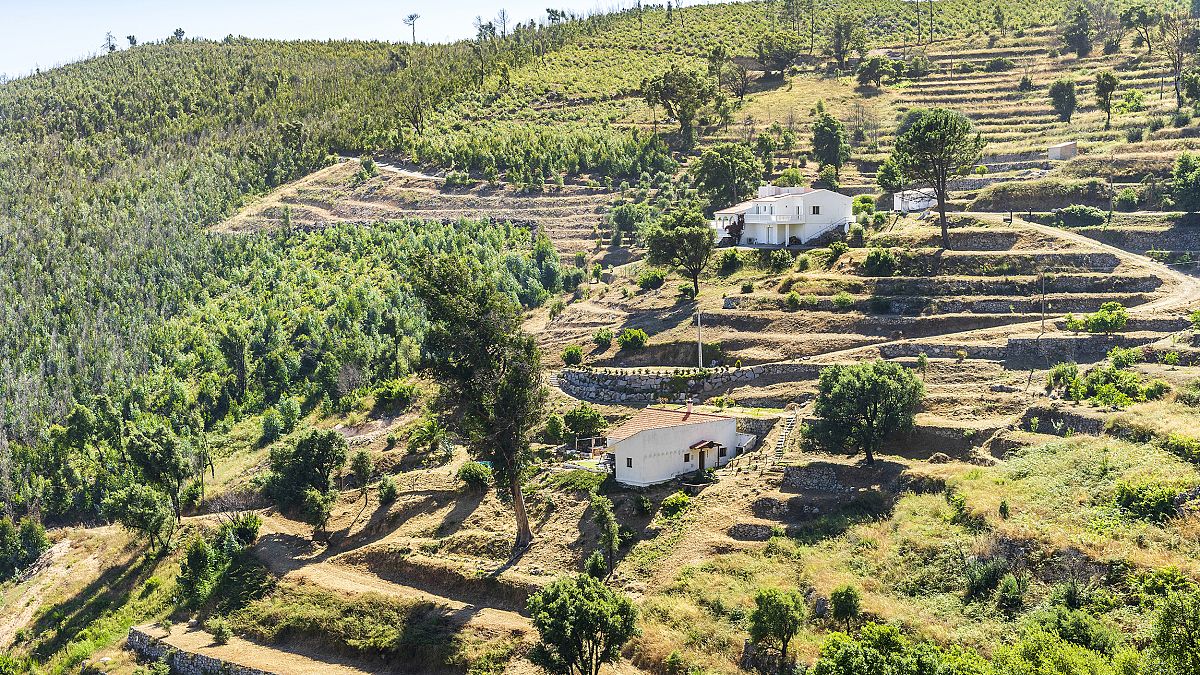
Like many components of Southern Europe, southern Portugal is experiencing drought and a decline in rainfall which has impacted the productiveness of the region’s agricultural sector, explains Vânia Sousa, environmental researcher on the College of Algarve.
“With the results of local weather change, we don’t count on the drought to ease. We have to work collectively on new sustainable options to assist resolve regional water shortage,” she burdened.
ADVERTISEMENTThe eGroundwater challenge
Led by environmental scientists from the College of Algarve and supported with local weather information corresponding to irrigation forecasts and historic climate patterns, the ‘eGroundwater’ challenge is a cell utility centred round a collective, citizen-driven strategy to floor water management.
The eGroundwater platform goals to present farmers and groundwater customers consolidated data on the situation of water provides and technical specs whereas additionally permitting customers to add and share their own information.
The app incorporates seasonal meteorological forecasts from the Copernicus Local weather Change Service (C3S) that are used to anticipate cumulative precipitation in agricultural areas. This helps farmers predict their water quota and optimises the usage of water throughout irrigation season.
Moreover, CMIP6 local weather projections from C3S are used to speak future recharge situations and anticipate how local weather change can impression groundwater ranges. This data is offered to groundwater customers throughout workshops, for suggestions and to design pathways for adaptation in line with future groundwater availability.
Paradigm shift in water use and management
Improvements such because the eGroundwater utility current a paradigm shift in water use and management, placing the facility again into the hands of water customers. The strategy is proving profitable in close by areas together with Morocco, Algeria and Spain.
Vânia Sousa, who’s spearheading the programme, says a giant a part of the success to date is transparency and accountability – but it surely all begins with accumulating and inputting local weather information.
“Probably the most crucial points on groundwater management is information shortage. Massive Information and Enhanced Data Techniques (EIS) are key to overcoming this impediment by offering customers and managers helpful, exact and sound information and data.”
The platform facilitates water utilization simulations, co-building of recent management situations, establishing of a citizen data system on groundwater availability and dynamics that underpin the eGroundwater resolution.
Copernicus information helps farmers
More and more, Copernicus Local weather Change Service (C3S) is working to assist the event of sensible environmental options such because the eGroundwater resolution.
Their information gathering strategies span earth remark techniques (drones, distant sensing) and automated sensors (soil moisture ranges) – instruments which assist communities and companies put together for a altering local weather.
ADVERTISEMENTInformation on soil high quality, as an example, can point out whether or not crops have the optimum quantity of water and scale back irrigation as a lot as 20 per cent with out reducing productiveness.
“These progressive options that mix science along with human wants and behavior work and it is vitally necessary new options are explored as we head into one other doubtlessly dry and sizzling summer time,” Sousa mentioned.
Past eGroundwater, Copernicus presents an enormous number of satellite tv for pc and in-situ local weather information and monitoring companies to assist environmental management, with initiatives such because the World Drought Observatory (a part of the Copernicus Emergency Management Service).
In Europe, initiatives utilizing Copernicus information embrace the NERC-funded European Groundwater Drought Initiative and FutureWater’s Groundwater Drought Index, at the moment being examined in Southern Spain the place unsustainable groundwater improvement threatens water safety in addition to protected ecosystems.
A pilot for the longer term
Within the Algarve’s Campina de Faro aquifer case examine, early curiosity in the eGroundwater challenge amongst farmers suggests an openness in the region for a structural resolution to water shortage.
The challenge’s actions have additionally helped College of Algarve researchers develop an elevated understanding of human pressures performing upon the aquifer system, hydraulic behaviour and relationships with connecting water our bodies.
While early-stage obstacles are par for the course, corresponding to uncertainty on present distribution, low person belief and an absence of incentive for farmers to trace their water use, scientists are assured initiatives like these will proceed to be explored, notably in regional environments the place it is simpler to handle.
“While it’s an early stage in this pilot program, there are robust indicators this may very well be a way more environment friendly and happier course of for each agricultural points and tourism customers. Socially, it’s bringing good outcomes as we really feel extra accountable to our friends than to governments in a faraway metropolis.
“Because of this, I actually assume that native, place-based actions are key to constructing resilience to local weather impacts and occasions corresponding to droughts,” Sousa concluded.