

Rising awareness among urban parents is driving demand for structured preschool education in city neighborhoods
Early childhood education between the ages of two and six plays a significant role in shaping language, emotional, and social development. In India, this understanding is becoming increasingly common among urban families, particularly in cities like Lucknow where educational awareness and aspirations are steadily rising.
Indira Nagar, one of Lucknow’s well-developed residential areas, reflects this shift clearly. With a growing population of young working parents and nuclear families, the demand for structured preschool education has seen noticeable growth. The announcement of a new preschool launch in the locality highlights how early learning is becoming a priority at the neighborhood level.
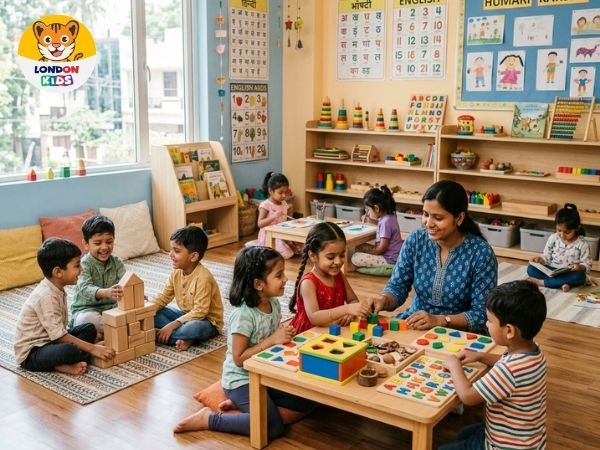
Early childhood education refers to organized learning programs designed for children before formal schooling begins. These programs focus on foundational skills such as communication, basic numeracy, motor development, and social interaction. According to the National Education Policy (NEP) 2020, this stage is essential for building a strong base for lifelong learning. The policy emphasizes play-based and activity-driven approaches rather than rote memorization.
In urban centers like Lucknow, parents are increasingly asking practical questions about early education. What type of learning environment supports creativity? How can children develop confidence at an early age? What prepares them for formal schooling without pressure? These questions are shaping how preschools are evolving across Indian cities.
From an industry perspective, the preschool sector is witnessing steady expansion in urban neighborhoods rather than only large city hubs. Areas like Indira Nagar are becoming focal points because they combine accessibility, population density, and a rising demand for quality education. This localized expansion allows parents to access structured learning environments closer to home.
“Urban parents today view preschool education not as a convenience, but as a foundation that shapes a child’s ability to learn, communicate, and adapt.”
— Vikas Singh, Co-founder, London Kids Preschool
This shift is closely linked to changing family structures. With both parents often working, there is a growing need for safe and engaging environments where children can learn and interact. However, the focus is no longer just on supervision. Parents are actively seeking institutions that offer well-defined curricula, trained educators, and balanced development.
Another important factor is exposure to global education trends. Through digital media and online communities, parents are more informed about early learning methods such as experiential learning, storytelling, and activity-based teaching. As a result, expectations from preschools have evolved significantly over the past decade.
At the same time, the challenge for the industry lies in maintaining consistency and relevance. While structured models provide clarity, they must also adapt to local cultural contexts and learning needs. Urban neighborhoods like Indira Nagar represent a mix of traditional values and modern expectations, making it important for preschools to strike a careful balance.
The entry of organized preschool formats into such areas reflects this broader transformation. Institutions are focusing on creating environments that encourage curiosity, communication, and independence among children. The presence of brands like London Kids Preschool in Indira Nagar is part of this wider trend, where structured early education models are becoming more accessible within city neighborhoods.
Local leadership also plays a key role in shaping these initiatives. The involvement of individuals such as Juhi Srivastava, associated with the Indira Nagar center, highlights how local understanding contributes to building trust within the community. Parents often look for familiarity and reliability, which local operators can help establish.
Beyond individual families, the expansion of preschools into urban areas has a wider community impact. It creates employment opportunities for teachers and staff while also encouraging a more active conversation around child development. Over time, this contributes to a more informed and engaged parent community.
However, affordability remains an important consideration. For preschool education to reach a wider audience, it must be accessible to middle-income families. Balancing quality infrastructure and teaching standards with reasonable pricing is essential for sustainable growth in this sector.
Looking ahead, the future of early childhood education in India is likely to be shaped by continued urban expansion and increasing parental awareness. Cities like Lucknow are expected to play a significant role in this growth, as more families prioritize structured learning during the early years.
The launch of a preschool in Indira Nagar is therefore not just an isolated development. It reflects a broader shift in how urban India approaches early education—moving from informal care to structured learning environments that support holistic development.
As awareness deepens and expectations evolve, preschools will continue to play an important role in shaping the educational journey of children from the very beginning.