

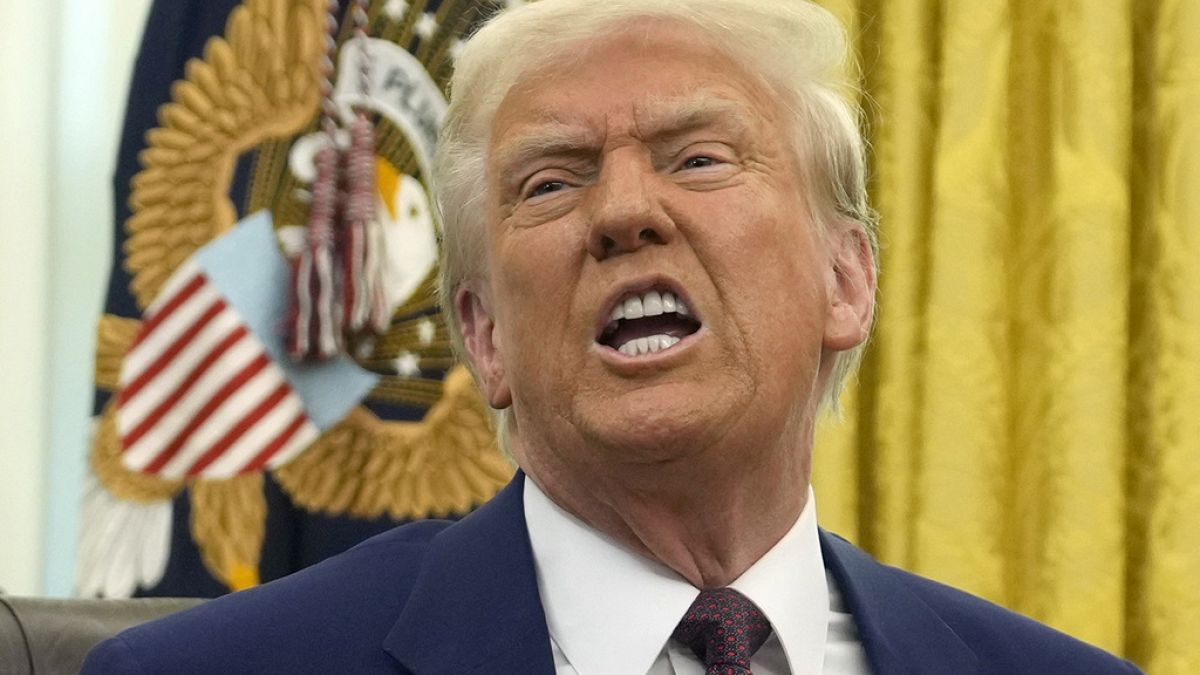
US President Donald Trump signs an executive order implementing reciprocal tariffs on US trade partners and adversaries as he pushes to eliminate trade imbalances with Washington.
 ADVERTISEMENT
US President Donald Trump has rolled out a plan to increase US tariffs to match tax rates that other countries charge on imports of US products, fuelling possible economic confrontation with allies and rivals as he looks to “eliminate trade imbalances”.
“I’ve decided for purposes of fairness that I will charge a reciprocal tariff,” Trump said in the Oval Office at the proclamation signing. “It’s fair to all. No other country can complain.”
The 47th US president put the plan in motion as he signed an executive order on Thursday in the White House Oval Office. Trump’s administration insists that the new tariffs would equalise the ability of the United States and foreign manufacturers to compete.
The tariff increases would be customised for each country and carry a goal of starting new trade negotiations. Other nations might also feel the need to respond with their own tariff increases on American goods, making this a risky and high stakes wager for a US president eager to declare his authority over the US economy.
These new taxes would likely be paid by American consumers and businesses, either directly or in the form of higher prices. Economists believe the plan could easily backfire on Trump is his agenda pushes up inflation and slows down growth.
The US does have low average tariffs, but Trump’s plans, as detailed in the executive order, looks set to jack up taxes on imports, rather than pursue fairness.
The United States also has regulatory restrictions that limit foreign products, says Scott Lincicome, a trade expert at the Cato Institute.
“It will inevitably mean higher tariffs, and thus higher taxes for American consumers and manufacturers,” he said. Trump’s tariffs plan “reflects a fundamental misunderstanding of how the global economy works.”
Trump’s plan looks to identify value added taxes (VAT) – similar to sales taxes common in the European Union – as a trade barrier to be included in any reciprocal tariff measure. Other nations’ tariff rates, regulations and subsidies to various industries would among the factors the Trump administration would evaluate when assessing tariffs.
A senior White House official, who insisted on anonymity, told the Associated Press that the expected tariff revenues would help balance the expected $1.9 trillion (€1.82 trillion) budget deficit. The official also added that the reviews needed for the tariffs could be completed within a matter of weeks or a few months.
The possible tax increases on imports and exports could be significant in comparison to the comparatively modest tariffs Trump imposed during his first term in office.
The US-EU trade volume last year totalled nearly $1.3 trillion (€1.24 trillion). Washington however exported almost $270 billion (€258 billion) less to the bloc than it imported, according to the US Census Bureau.
Trump has openly antagonised multiple US trading partners over the past several weeks since taking office, threatening to levy tariffs. The moves have prompted some countries to retaliate with import taxes of their own, possibly triggering a trade war.
In recent weeks, Trump has imposed tariffs on Canada and Mexico – Washington’s two largest trading partners – which he has since suspended for 30-days after the two countries agreed to reinforce their borders with the US.
He’s also imposed tariffs on Chinese imports for the country’s role in the production of the opioid fentanyl. The 47th US president also imposed a 25% blanket tariff on steel and aluminium imports into the country.
ADVERTISEMENTThe EU, Canada and Mexico have countermeasures ready to inflict economic pain on the US in response to Trump’s actions, while China has already taken retaliatory steps with its own tariffs on US energy, agricultural machinery and large engine autos.
The Trump team has discredited criticisms of its tariffs even as it had acknowledged the likelihood of some financial pain. Analysts at US bank Wells Fargo say the new plans will likely hurt growth this year.
Trump has tried to downplay potential consequences of his plans, saying the policies would only trigger a “brief bump in inflation”.
The US president also declined to allow agencies to analyse possible impacts on consumers, including price rises saying, “there’s nothing to study. It’s going to go well.”
ADVERTISEMENT