

When mapping out a development path toward 2050, global business leaders have concluded that minimizing negative impacts is no longer enough. Enterprises must go further, striving for regeneration and adaptation. In Vietnam, these two criteria are shaping the “DNA” of a modern megacity.
Through collaborations with 40 member companies, the World Business Council for Sustainable Development (WBCSD) introduced Vision 2050: Time to Transform, a blueprint enabling over nine billion people to live well within the planet’s limits. Among the nine sectors that require transformation, living spaces stand out as a central focus.
However, what WBCSD emphasizes most is not the roadmap itself. Peter Bakker, President and CEO of WBCSD, notes that the true innovation of Vision 2050 is requiring leaders to change their mindset. At the same time, businesses must pivot and reshape their economic models to build long-term resilience through adaptation and pursue a regenerative approach, moving beyond a simple “doing no harm” mindset. According to WBCSD, this shift marks the line between incremental change and accelerated transformation.
In Vietnam, this mindset has been realized by Vinhomes, a subsidiary of Vingroup, Vietnam’s leading private conglomerate, through its ESG++ development framework, which expands the three traditional ESG pillars with two additional components: regeneration and adaptation. According to Vinhomes leadership, this initiative carries forward the aspiration of “creating timeless urban wonders.”
Discussing what defines a future urban wonder, Jean-Paul de la Fuente, Director of New7Wonders and Chairman of the “7 Wonders of Future Cities” campaign, observed that regenerative ambition goes even further than sustainability by asking how development can actively restore the natural systems on which urban life depends.
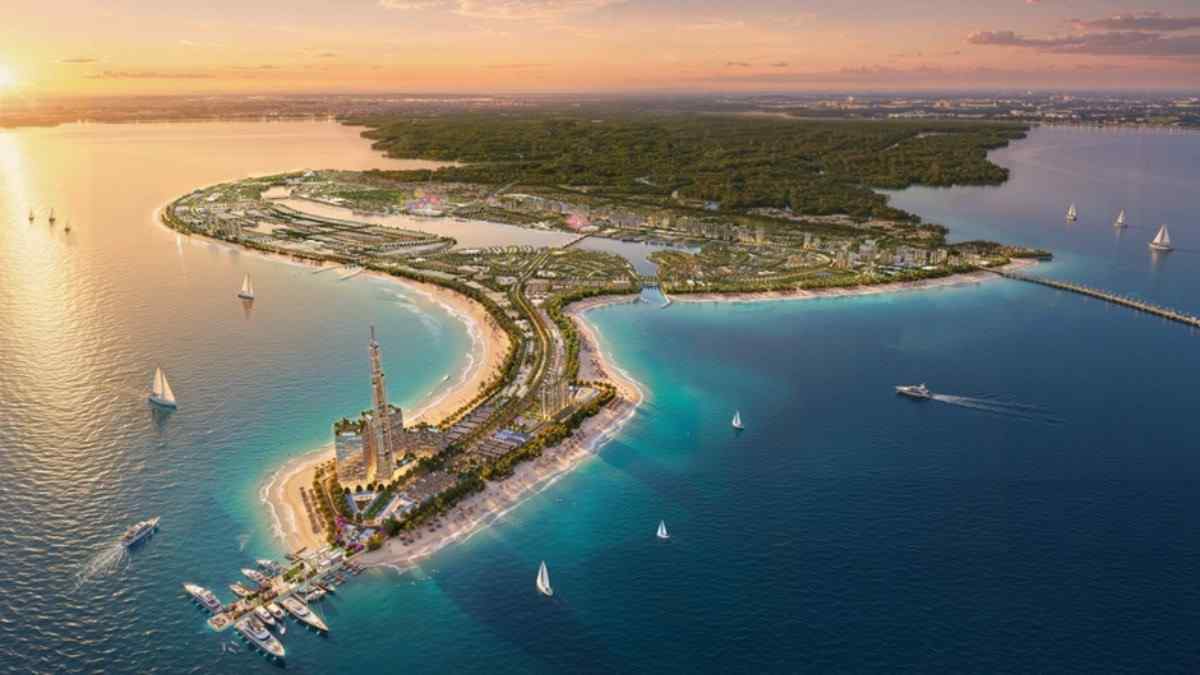
This criterion is reflected in how New7Wonders views Vinhomes Green Paradise, developed by Vinhomes in Can Gio, Ho Chi Minh City. When recognizing the megacity as the first official candidate for the “7 Wonders of Future Cities” campaign, the organization stated that the ESG++ model was the key factor helping the project stand out from other nominees.
“Vinhomes has placed environmental and social ambitions into its master plan, including green infrastructure and sustainable mobility. Factoring these elements in right from the start is a vital part of balancing growth with sustainability,” Jean-Paul de la Fuente added.
Across the 2,870-hectare megacity, regeneration is embedded into everything from the architectural blueprints to the foundations. Under the master plan, buildings occupy only about 17% of the total area, while more than 930 hectares, nearly a third of the project, are dedicated to greenery and waterways. During construction, the K-DPM technology turns soft mud into regenerative fill material for land reclamation, limiting indirect emissions and reducing natural sand extraction. Located adjacent to the UNESCO-recognized Can Gio Mangrove Biosphere Reserve spanning over 75,000 hectares, the project also incorporates reforestation programs aimed at restoring native flora.
Meanwhile, adaptation is integrated into how the city operates. Regulating lakes, permeable surfaces and rainwater harvesting systems allow the metropolis to self-regulate its water resources. The project is also designed to deploy the Internet of Things (IoT), big data and artificial intelligence for environmental management and monitoring. This direction is measured against a global standard: the ISO 37122 provisional smart city certification from the World Council on City Data (WCCD), with indicators that are reassessed annually. This serves as a foundation to evaluate smart city criteria while allowing for changes during operation.
Green infrastructure and sustainable transport, the two elements highlighted by Jean-Paul De la Fuente, are tied to measurable targets. Once operational, the project aims to run on 100% clean electricity sourced from an offshore wind farm located 20 km off the coast, paired with solar power and battery storage. All internal transportation, from cars, motorbikes and buses to bicycles and canoes, is planned to be fully electric, heading toward net-zero emissions.
Following a field visit in 2025, Jean-Paul de la Fuente summed up his experience with a clear takeaway: Vinhomes Green Paradise demonstrates “an ambitious vision of how people, nature and urban development can coexist in harmony, sparking a conversation about the cities we wish to create for the future.” This explains the project’s strong appeal in the voting rounds of the “7 Wonders of Future Cities” campaign, helping bring Vietnam’s vision closer to global recognition.